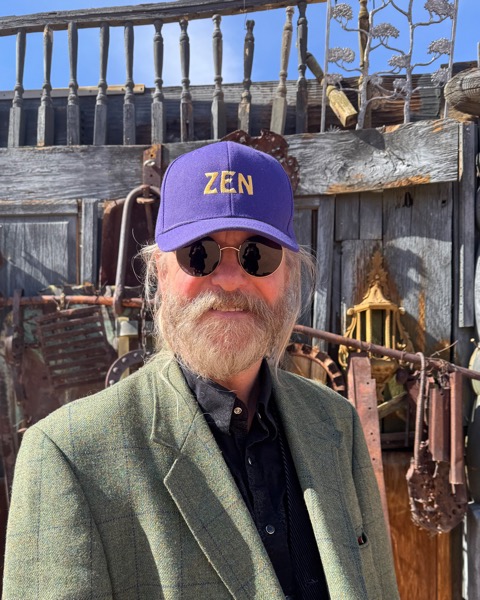
Scott Shaw Extended Biography
Scott Shaw (born September 23, 1958) is an American independent filmmaker, actor, author, and martial artist known for developing Zen Filmmaking—a spontaneous, scriptless method of production that emphasizes improvisation and presence over conventional planning—and for his extensive contributions to low-budget cult cinema. Born in Hollywood, California, he grew up partly in South Los Angeles before returning to Hollywood as a teenager, initially pursuing martial arts and Eastern mysticism rather than film. He is a high-ranking practitioner of Hapkido, holding 8th Degree Black Belt in the art, with certifications from organizations including the Korea Hapkido Federation. After traveling extensively in Asia during his twenties, Shaw entered the film industry in his early thirties, transitioning from acting to multifaceted roles as a producer, director, writer, editor, cinematographer, and composer. He has amassed numerous credits, largely through his prolific independent output, applying Zen Filmmaking principles to feature films, documentaries, and music videos that prioritize intuition and non-linear creativity. Among his most notable works are the cult action films The Roller Blade Seven, Samurai Vampire Bikers from Hell, Guns of El Chupacabra, and Max Hell Frog Warrior, which blend surreal elements, martial arts, and low-budget spectacle. In addition to filmmaking, Shaw is a prolific author of books on Zen Buddhism, martial arts philosophy, poetry, photography, and screenwriting, alongside pursuits in music and visual arts. His multifaceted career reflects a commitment to creative freedom and interdisciplinary expression across decades of independent work.
Early Life
Birth and Family Background
Scott Shaw was born on September 23, 1958, in Los Angeles, California. He spent his early childhood in South Central Los Angeles before returning to Hollywood for his adolescence. Publicly available information on his family background is limited. His father served in the military during World War II and earned a black belt in jujitsu. Shaw grew up in the diverse urban environment of Los Angeles.
Education and Early Travels
Scott Shaw's formal education focused on the social sciences and humanities, with undergraduate studies in cultural geography. He completed graduate studies in cultural and urban geography, humanities with an emphasis on literature, and Asian studies. He has taught courses on Asian studies, along with related subjects, at institutions including California State University, Los Angeles, University of California, Los Angeles, Santa Monica College, and Los Angeles Harbor College. In his late teens, after becoming a certified instructor of hatha yoga and meditation at age eighteen, Shaw embarked on his early travels to Asia. His first destination was India, where he resided in the Himalayan town of Rishikesh, studying and teaching the physical and meditative aspects of yoga. During this period, he was initiated into Buddhist, Hindu, and Sufi sects, took on the status of a sannyasa, and studied directly under teachers including Swami Satchidananda, Bhagwan Shree Rajneesh, Pir Vilayat Inayat Khan, and Thich Thien-An. Shaw then traveled to Japan, residing in Kyoto, where he deepened his understanding of meditation and the principles of Ki. Beginning in the late 1970s, these formative journeys to Asia marked the start of his lifelong pattern of extended stays and frequent returns to the region, profoundly shaping his perspectives on Eastern thought and culture.
Martial Arts Career
Training and Expertise
Scott Shaw is a lifelong martial artist who began his training in Hapkido at the age of six, training daily in the art. He has trained in both Hapkido and Taekwondo. He is the founder of Ki Sul Kwan Hapkido and serves as president of Hapkido Taekwondo International. His expertise in these Korean martial arts has informed his work in action-oriented film roles.
Teaching and Martial Arts Publications
Scott Shaw has been involved in martial arts instruction since his college years, when he began teaching professionally, and he has continued to offer seminars as well as instruction at colleges and universities. He founded Ki Sul Kwan Hapkido and serves as president of Hapkido Taekwondo International. His teaching emphasizes practical self-defense applications, deflection techniques using the opponent's energy, refined throwing methods for real-world effectiveness, and the integration of Ki cultivation through breath control alongside meditation for both physical power and spiritual development. Shaw has authored several instructional books on Korean martial arts, beginning with Hapkido: The Korean Art of Self-Defense, published by Tuttle Publications in 1996. He followed with The Ki Process: Korean Secrets for Cultivating Dynamic Energy from Samuel Weiser, Inc. in 1997, focusing on energy cultivation techniques. In 1998, Simon & Schuster released The Warrior is Silent: Martial Arts and the Spiritual Path, which explores the intersection of martial practice and spiritual growth. His works on Taekwondo include Taekwondo Basics from Tuttle Publications in 2002 and Advanced Taekwondo from the same publisher in 2006. Additional titles are The Tao of Self-Defense from Samuel Weiser, Inc. in 2000 and Chi Kung for Beginners from Llewellyn Publications in 2004. In 1994, Unique Publications produced his four-part instructional video series on Hapkido. For over three decades, Shaw has been a contributor to major martial arts magazines, including Black Belt, Tae Kwon Do Times, Inside Karate, Inside Taekwondo, and Karate Kung Fu Illustrated. His articles cover a wide range of topics such as Hapkido joint locks, throws, deflection principles, cane and staff techniques, Taekwondo kicks and forms applications, self-defense against street attacks, Ki and Qi Gong concepts, and Korean martial arts history and philosophy. Some of these articles have been compiled into collections like Hapkido Articles on Self-Defense.
Film and Television Career
Acting Roles
Scott Shaw has built an extensive acting career predominantly in low-budget independent cinema, with a focus on action, martial arts, sci-fi, and exploitation genres. He has amassed over 100 acting credits, many of which place him in leading or prominent roles as tough-guy heroes, vigilantes, detectives, or warriors who leverage his martial arts expertise. These performances often appear in direct-to-video or micro-budget productions known for their cult sensibilities and unconventional narratives. Shaw's on-screen acting began in the mid-1980s with a role as Jimmy T. in the television movie Blade in Hong Kong (1985). He gained early exposure through guest appearances on episodic television during the late 1980s and early 1990s, including roles in series such as MacGyver (1991), Knots Landing (1991), Who's the Boss? (1991), and Coach (1991). He also secured small parts in higher-profile feature films, such as a Cyberdyne technician in Terminator 2: Judgment Day (1991) and a cameo as himself in The Player (1992). The bulk of Shaw's acting work emerged in the 1990s and extended into subsequent decades through independent projects, where he frequently portrayed action-oriented protagonists. Representative roles include Hawk in The Roller Blade Seven (1991) and its sequels, Ace in The Divine Enforcer (1991), Alexander Hell in Samurai Vampire Bikers from Hell (1992), Max Hell in Toad Warrior (1996), Detective Jake Blade in Hollywood Cops (1997) and related films, and Jack B. Quick in Armageddon Boulevard (1998) and Guns of El Chupacabra (1998). Many of these credits stem from collaborations with Donald G. Jackson, though Shaw has also appeared in standalone independent efforts featuring similar martial arts-infused, genre-driven characters. His later acting roles continued in this vein, including parts in films such as Undercover X (2001) as Truck Baker and Samurai Johnny Frankenstein (2014) as Sam Rockmore.
Directing, Producing, and Screenwriting
Scott Shaw has been a prolific independent filmmaker, frequently serving as director, producer, and screenwriter on his own projects, which are characterized by ultra-low-budget or no-budget production values. He holds 188 directing credits, 206 producing credits, and 75 writing credits, with most of these being self-produced micro-budget films and shorts that emphasize spontaneous creation in line with his Zen Filmmaking approach. Many of his works see him handling multiple roles simultaneously, reflecting a DIY ethos common to his independent output. During the 1990s and early 2000s, Shaw directed, produced, and often wrote genre-oriented feature films that blend martial arts, action, horror, and exploitation elements. Notable examples include Max Hell Frog Warrior (2002), where he served as director, producer (under the alias Jake Blade), and writer; The Rock 'n Roll Cops (2003), in similar multi-hyphenate capacities; Vampire Boulevard (2004); and Vampire Sunrise (2014). These projects exemplify his low-budget style, relying on minimal resources and improvisational techniques to create cult-oriented content. In more recent years, Shaw has maintained a high volume of output, directing numerous short and experimental films, many with location-specific themes in Japan and Berlin. Examples include titles such as Vampire Noir (2007), The White Cat (2011), Samurai Johnny Frankenstein Black and White (2014), and more recent or upcoming shorts like Kyoto in a Heartbeat (2025), Tokyo in a Heartbeat (2025), and Night Falls in Shinjuku (2025), where he continues to direct, produce, and write in his characteristic independent mode. This body of work underscores his ongoing commitment to spontaneous, resource-limited filmmaking across various formats.
Collaboration with Donald G. Jackson
Scott Shaw's collaboration with independent filmmaker Donald G. Jackson began in the early 1990s following a chance encounter when Jackson reached out to Shaw after receiving his unsolicited headshot and the two met at Gower Gulch in Hollywood. This partnership marked the birth of Zen Filmmaking, a spontaneous, scriptless approach to production emphasizing instantaneous creativity and spiritual intuition, with Jackson providing low-budget expertise and Shaw contributing the term and philosophical framework. Their first major joint project was The Roller Blade Seven (1991), directed by Jackson and co-written by Jackson and Shaw, with both serving as producers; Shaw starred as the lead character Hawk Goodman, handled editing, and composed the music. Shot on 16mm film with a modest budget, the production utilized striking locations such as the Los Angeles Dam and Griffith Observatory, incorporating innovative techniques like the "Roller-cam" for dynamic action sequences. The film and its immediate follow-up, Return of the Roller Blade Seven (completed in early 1992 and premiered at the American Film Market that year), were shot back-to-back and viewed by the filmmakers as a cohesive artistic statement in their emerging Zen style. An unauthorized re-edit by an executive producer combined footage from both into Legend of the Roller Blade Seven, a version neither Jackson nor Shaw endorsed due to altered editing, added narration, and removed credits, though Shaw later released an authorized DVD edition aligning closely with the original vision. The duo continued their collaboration on additional Zen films, including Guns of El Chupacabra (1997), which Jackson regarded as one of their two masterpieces alongside the Roller Blade Seven series, inspired by a spontaneous idea from an internet article about the mythical creature. Other joint works included Armageddon Boulevard and Max Hell Frog Warrior (a re-edited version of earlier material), further exemplifying their shared commitment to unscripted, spiritually oriented independent cinema. Their partnership significantly influenced the independent film scene by pioneering low-budget, experimental filmmaking that gained cult status for its abstract style and rejection of conventional narrative structures. Jackson's death in 2003 ended their active collaboration, after which he entrusted Shaw with all rights to his films and footage to preserve their joint legacy.
Zen Filmmaking
Philosophy and Principles
Zen Filmmaking is a filmmaking philosophy developed by Scott Shaw that emphasizes cinematic spontaneity, creative freedom, and mindfulness in the present moment, drawing direct inspiration from Zen Buddhist concepts of enlightenment arising naturally when one moves beyond the planning and controlling mind. The approach views filmmaking as a meditative practice where the filmmaker releases rigid preconceptions to allow the film to reveal itself organically, achieving what Shaw terms "cinematic enlightenment." The philosophy originated from Shaw's personal experiences in independent filmmaking, particularly in the early 1990s when abandoning a pre-written screenplay during production opened the way for more liberated and intuitive creation. At its foundation lies the complete rejection of a traditional screenplay, which Shaw describes as a limiting device that imposes artificial structure, stifles spontaneous inspiration, and generates unrealistic expectations—especially in low-budget or independent contexts. By removing the script, Zen Filmmaking enables the filmmaker to respond directly to the moment, incorporating unforeseen elements and allowing the narrative to emerge naturally rather than being forced into a predetermined form. Shaw articulates several core tenets that guide the practice: making all unexpected situations work to the production's advantage; avoiding wasted resources on constructed sets by using real locations whose natural aesthetics enhance the film; acting decisively in the moment with confidence that most choices will succeed; preventing the storyline from overpowering broader artistic vision; embracing spontaneity to avoid over-planning that blocks instantaneous creative insights; and ultimately desiring nothing from the outcome so that whatever arises is inherently perfect. These principles underscore that Zen Filmmaking is not chaotic or unplanned randomness but a disciplined process requiring strong mental focus and clarity to sustain coherence without scripted dialogue, scenes, or structures. This philosophy contrasts sharply with traditional Hollywood filmmaking, which relies on detailed scripts, storyboards, rigid scheduling, and extensive pre-production planning that can constrain natural creativity and impose artificial limitations on the creative process. Shaw has set forth these ideas in his writings, including the book Zen Filmmaking, which serves as a comprehensive guide to the method, and Zen Filmmaking: The Manifesto, a concise declaration of its core vision prioritizing present-moment awareness and intuitive guidance over conventional constraints.
Application in His Projects
Scott Shaw has applied Zen Filmmaking principles across multiple projects, emphasizing spontaneity, the absence of a traditional screenplay, and adaptability to whatever unfolds during production. The approach originated during the making of The Roller Blade Seven (1991), a collaboration with Donald G. Jackson. After an initial weekend of shooting proved disappointing due to cast performances, Shaw and Jackson abandoned the pre-written script and proceeded to film the movie while inventing the story in the moment. This decision marked the birth of Zen Filmmaking as a deliberate method for low- or no-budget productions, where removing rigid planning eliminates potential sources of disappointment and allows the film to emerge naturally. The same spontaneous technique carried over to the sequel Return of the Roller Blade Seven and to Samurai Vampire Bikers From Hell, which Shaw directed independently shortly afterward. These early projects exemplified tenets such as making unpredicted situations work to advantage and using real-world locations without constructed sets, relying on small crews to capture authentic aesthetics. Shaw has noted that this method requires a focused mental state akin to meditation, enabling coherent storytelling despite the lack of scripted dialogue or predefined scenes. Shaw continued applying Zen Filmmaking in later works, including collaborations with Jackson after their reconnection in 1996. One example is 9mm Sunrise, originally filmed in 1996 as Shotgun Blvd., with additional scenes shot in 1998 and a final re-edit in 2007 that incorporated never-before-seen material to enhance the storyline. This flexibility in editing and adding footage years later reflects the philosophy's embrace of ongoing inspiration and openness to change rather than fixed outcomes. More recent solo projects also demonstrate the approach. The Hard Edge of Hollywood (2008) was created as a Zen Film thriller exploring the darker aspects of low-budget filmmaking through melodrama and docudrama elements, drawing directly from real industry experiences while maintaining the spontaneous, no-script process. Across these works, Shaw's application of Zen Filmmaking has consistently prioritized creative freedom and presence in the moment, resulting in films that adapt to available resources and circumstances without predetermined constraints.
Literary Career
Books on Spirituality, Martial Arts, and Philosophy
Scott Shaw has authored numerous books on spirituality, martial arts, and philosophy, with a focus on integrating Eastern contemplative traditions such as Zen Buddhism and Taoism with physical practices and inner development. His works span instructional guides on martial arts techniques and energy cultivation to meditative and philosophical reflections, often emphasizing the unity of body, mind, and spirit. Many titles have been published by established presses including Inner Traditions and Weiser Books, while later works frequently appear as published editions in print and digital formats. A prominent example is The Warrior Is Silent: Martial Arts and the Spiritual Path (1998), which explores the spiritual foundations of Eastern martial arts practice and their essential connection to achieving mastery, presenting illustrated self-defense techniques that harness ki energy to foster balance between physical skill and spiritual growth. Samurai Zen (1999) provides a practical and illustrated approach to combining Zen awareness with the samurai tradition, particularly through Iaido, offering exercises for refining the senses, centering the mind and body, and cultivating higher consciousness as a path to freedom and presence. The Tao of Self-Defense (2001) applies Taoist principles to martial arts and self-defense, framing physical techniques within a philosophical context of harmony and natural flow. Shaw has also produced several works centered on Zen meditation and mindfulness, including Nirvana in a Nutshell: 157 Zen Meditations, a collection of concise meditative insights, and Zen O'Clock: Time to Be, which encourages living in the present moment through Zen perspectives. His "Further Zen Ramblings from the Internet" series comprises multiple volumes of philosophical essays on Zen, consciousness, metaphysics, and existence, often presented as contemplative reflections drawn from online writings. Other notable titles address energy practices, such as The Ki Process: Korean Secrets for Cultivating Dynamic Energy, which details methods for developing internal energy, and introductory texts on chi kung and yoga breathing. These publications collectively highlight Shaw's emphasis on accessible spiritual and philosophical exploration through both martial and meditative lenses.
Journalism and Articles
Scott Shaw has contributed extensively to journalism and periodicals, particularly in the fields of martial arts, spirituality, and film. He has been a regular contributor to major national martial arts magazines and has published numerous articles in respected industry journals. His martial arts writings have appeared in publications such as Black Belt, Tae Kwon Do Times, Inside Kung-Fu, and Martial Arts Illustrated. More than three hundred of his articles on the martial arts have been published, establishing him as a mainstay in these outlets since the late 1980s. Shaw has also written hundreds of articles on Zen Buddhism, Asian studies, and filmmaking topics. Many of these, especially on Zen Filmmaking philosophy and application, appear on his dedicated websites and blog, where he shares ongoing writings on spirituality, cinema, and related subjects. These shorter-form pieces often echo themes from his broader literary work on spirituality, martial arts, and philosophy.
Photography and Other Creative Work
Photographic Projects
Scott Shaw has been an avid photographer since childhood, capturing images that reflect his extensive travels and interest in spiritual and cultural landscapes. His photographic projects center on published books that document locations around the world, often emphasizing urban environments, sacred sites, and experimental visual approaches. Many of these books follow a recurring format titled "[Location]: A Photographic Exploration," featuring destinations such as Bangkok, Kathmandu, Varanasi and Bodh Gaya, Tokyo, Sedona, and various cities in India, Thailand, and beyond. Several volumes highlight spiritual and Buddhist themes, including titles like Varanasi and Bodh Gaya: Shade of the Bodhi Tree, Sedona Realm of the Vortex, and Snapshot Tibet. Other works adopt stylized techniques, such as the "Screenshot" series depicting cities like Hong Kong and Istanbul, or variations like Hong Kong Out of Focus and South Korea in a Blur. Shaw maintains an ongoing personal photo log called The Scott Shaw Pholog, consisting of spontaneous, unposed, and unaltered images from daily life and travels, embodying his philosophy of positivity and natural observation. His photography is accessible through various online galleries and platforms, including dedicated albums on Flickr, a snapshot gallery on Tumblr, and profiles on Saatchi Art and Fine Art America. Shaw also shares recent and archival photographs on Instagram under the handle @zenfilmmaking.
Online Presence and Digital Media
Scott Shaw maintains an official website at scottshaw.com, which serves as the central online hub for his extensive body of work and serves as a primary source for biographical details and creative output. The site encompasses sections dedicated to his books, films, music, art, biography, FAQ, Zen philosophy, Hapkido, filmmaking techniques, news, press coverage, external links, and a blog, providing a comprehensive digital archive of his contributions across multiple disciplines. A key component of his online presence is The Scott Shaw Blog, which he began composing on scottshaw.com over a decade ago and has continued as a frequent outlet for reflective prose on spirituality, philosophy, and personal responsibility. Content from the blog has been compiled into multiple published volumes known as Scott Shaw Blog Books, demonstrating the site's role in facilitating direct publishing and long-form dissemination of his ideas without intermediary publishers. The blog remains active, with ongoing posts that extend his philosophical teachings and Zen-oriented perspectives to a global audience through accessible digital means.
Personal Life and Philosophy
Spiritual Beliefs and Lifestyle
Scott Shaw's spiritual beliefs are primarily rooted in Zen Buddhism, which he characterizes as an abstract and ultimately indefinable concept lacking any fixed essence or universal definition. He asserts that attempts to conceptualize Zen transform it into "a something" when its true nature is "a nothing," and genuine understanding emerges only when practitioners recognize both Zen and themselves as undefined and empty of fixed form. A core principle in his philosophy is approaching every aspect of life as a new experience, unburdened by prior knowledge, expectations, worries, or emotional attachments to past events and relationships. This mindset cultivates freedom from mental constraints and promotes spontaneity, allowing individuals to engage each moment freshly and without preconception. Shaw emphasizes non-attachment to personal identity, history, and self-definition imposed by others, advocating the erasure of fixed self-narratives to foster inner wholeness and authentic presence. His writings reject spiritual materialism, guru dependency, ego-driven claims to enlightenment, and performative spirituality, instead prioritizing humble, ego-free service and conscious, intentional interaction with the world. In terms of lifestyle, Shaw promotes everyday mindfulness through positivity and small, deliberate actions, encouraging people to make the world better "one positive word, one positive action at a time." His personal practices draw from Zen meditation forms like zazen, breath awareness, and various yoga disciplines including hatha, raja, kundalini, and tantra, presented as practical, non-institutional tools for heightened awareness and self-control rather than rigid routines. These beliefs shape his approach to life choices, favoring presence, non-judgmental engagement, and positive intention in daily interactions while avoiding over-seriousness or attachment to outcomes. His spiritual outlook informs his broader creative work as an extension of these principles.
Current Activities and Legacy
Scott Shaw remains active in independent filmmaking as of the mid-2020s, producing and directing a high volume of short-form projects that adhere to his Zen Filmmaking methodology, which emphasizes spontaneous creation without scripts or preconceived storylines. His recent output includes numerous shorts from 2025 and 2026, many inspired by travel locations in Japan and Germany, such as Tokyo in a Heartbeat, Kyoto in a Heartbeat, Die Berliner Mauer, and Hippie Drum Circle, where he frequently serves as producer, director, and editor. He has continued to publish writings on creative life and cinema, including Zen Filmmaking 3: Expanded Writings on Creative Life and the Cinematic Arts, released on November 22, 2019, which expands on his philosophical approach to independent production. Shaw sustains his engagement with photography and documentation, frequently traveling to Asia and the Middle East to capture cultural subjects in words and images shared across online platforms. He also maintains his blog and oversees related websites dedicated to his Zen Filmmaking principles and DVD distribution. Shaw's legacy centers on his development of Zen Filmmaking since 1991, a method that integrates Zen concepts of presence and intuition into low-budget cinema, influencing independent filmmakers to prioritize spontaneous creativity over traditional structures. He is further recognized for his longstanding contributions to martial arts and spiritual literature, including his status as a high-ranking practitioner and author whose works on Zen, Hapkido, and related disciplines have circulated widely in those fields.
Source: Grokipedia